.png "North East Housing Initiative NEHI. Building Communities One Home at a Time")
NEHI Construction LLC
Mission
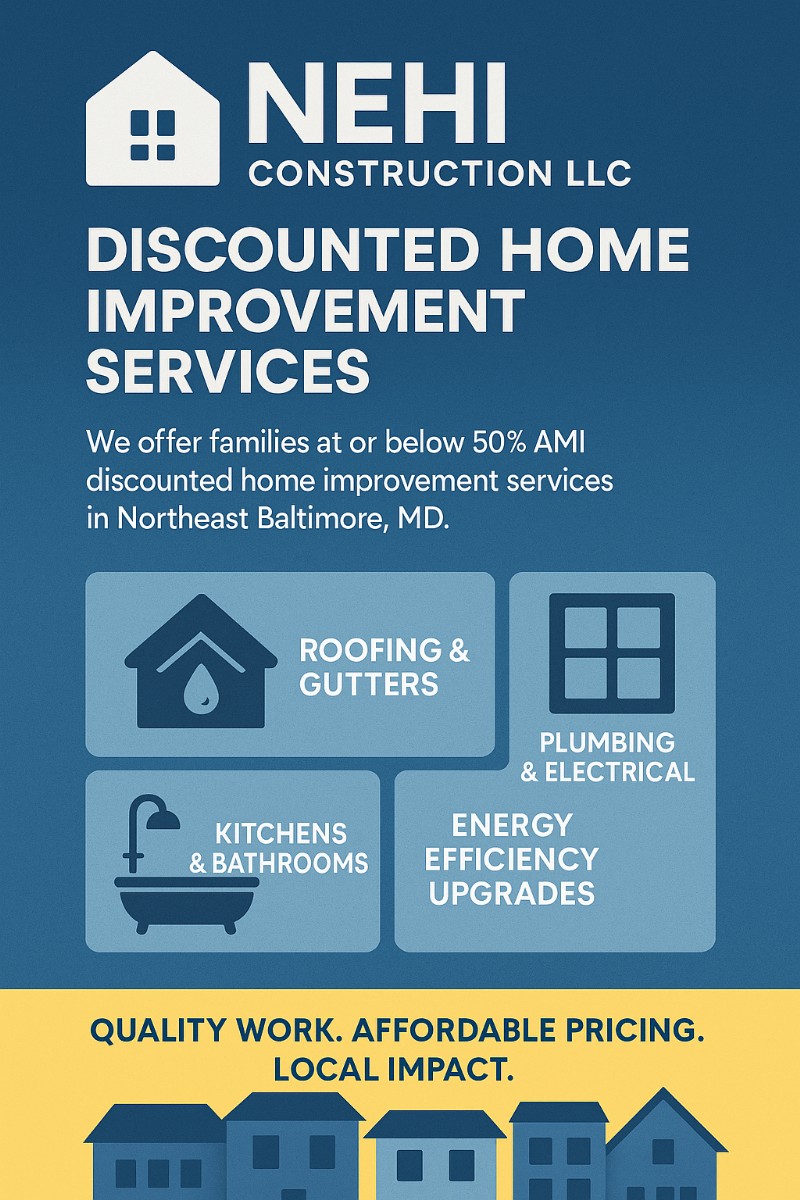
Many families in Baltimore City earning at or below 50 % of AMI live in homes that require critical repairs—roofs in disrepair, structural issues, leaky windows, failing systems—but simply cannot afford the full cost. Without intervention, these deferred repairs lead to more costly damage, unsafe living conditions, and board-ups. NEHI LLC seeks to close that gap by subsidizing or underwriting the difference between the market costand what a very low- income family can reasonably pay, enabling safe, durable repair while preserving affordability and dignity.
 Why This Matters in Baltimore City
Many homes in Baltimore are older rowhouses or multifamily buildings with roofs that need repair or replacement. When these repairs are deferred, the problems compound over time—leaks lead to rot, structural issues, and even mold, creating unsafe living conditions. Families earning at or below 50% of the area median income (AMI) are often already rent-burdened, with a large portion of their income going toward housing costs, making major repairs financially out of reach. By investing in roof repair and replacement, NEHI helps stabilize the city’s aging housing stock, preserve neighborhoods, prevent displacement, and reduce the future burden of emergency repairs on city agencies and nonprofits. “By covering most of the repair cost, families avoid debt, stay in their homes, and prevent long-term damage like leaks, mold, and structural decay. Stable homes mean stronger neighborhoods and lower costs for the city in the long run.”
NEHI LLC has the opportunity to create a transformative model for “deep-subsidy repair” in Baltimore—bridging the gap between what very low-income families can pay and what essential home repairs cost in the real market. Using clear examples like roofing, you can demonstrate tangible impact (e.g. “family saves $10,000”) and show that it’s not just a repair, but an investment in housing stability, community health, and long-term savings (for families, for the city, and for social services).
